
Back to work and breastfeeding? How to manage the change
Posted by Claire Hewitt, on August 10, 2026.
Estimated reading time: 9 minute(s)



Posted by Claire Hewitt, on August 10, 2026.
What you need to know about the work/feed juggle and essential nursing bras
Are you currently juggling breast pumps and bottles with commutes and Zoom meetings? Going back to work while you’re still nursing is a real gear shift, but you’re not alone. For Breastfeeding Awareness Month, we look at a common dilemma facing many working mums, and our own commercial director Francesca Fleming shares her own experience breastfeeding her second child right now.

The maths just doesn’t add up when it comes to breastfeeding advice and the average maternity leave. The World Health Organisation and the NHS recommend babies are breastfed exclusively for the first six months, and then up to the age of two and beyond when supplemented by solid foods, if this suits the mother and child. But this seems like a long time considering the UK falls behind many countries when it comes to breastfeeding rates: according to Unicef, only 12% of UK mothers are still exclusively breastfeeding at four months, falling to just 1% at six months. The research also found that six in 10 mums stop breastfeeding before they actually want to.
There are many reasons why mothers may decide to stop early – difficulties with feeding or illness being just two – but for some, it’s work that’s getting in the way. For most women, workplaces offer 52 weeks for maternity leave, but that doesn’t mean everyone takes the full year. Some women may feel pressured to return or risk falling behind in their career; for some it’s too financially difficult to stay away during the unpaid months; while others may be chomping at the bit to return.
But nursing your baby alongside a day job may come with challenges and sometimes outright discrimination. Take the recent news story of company founder Rachael Bews who was told that she couldn’t bring her five-month-old baby to an Amazon-run business course, even though her husband would be looking after the baby off-site, and she would need just a quick break to breastfeed. Amazon has since apologised for how it handled the situation, but Rachael admitted that she felt humiliated by the situation and excluded from important networking opportunities.
So, when work and breastfeeding collide, what are your rights, and how can you make the transition as smooth as possible to keep you and baby happy and healthy?

Babies thrive on routine, but your feeding schedule may need to shift to accommodate your working hours (and don’t forget time spent travelling to and from work). This could mean dropping daytime feeds and only feeding before and after work. But if your baby still needs breastmilk during the working day, you’ll need to leave expressed milk with whoever will be looking after your baby, whether that’s dad, another family member, childminder or the nursery.
Spend a few days practising as if it’s a working day so that you, baby and carer all get used to what’s happening and when: including when you need to express, whether baby will take the bottle, whether carer is familiar with the feeding schedule, and where milk and equipment will be stored.

Just like breastfeeding a newborn, using a breast pump can take a bit of practice. There’s a wide choice out there, from basic, cheaper manual pumps to pricier and more sophisticated smart pumps. Consider whether the aching hands are worth a manual pump, or if you really need to splash out on a pump that connects to an app on your phone. Explore options such as a quiet wearable pump that could help you express at your desk without the need to break from work.
Even though Francesca plans to take her full 12 months of maternity leave, she anticipates that breastfeeding will still impact her initial return to work: “I have a handheld pump which should come in handy at work if my breasts feel like they’re full. With my first baby I didn’t need to pump and just fed her in the evening before bed, during the night and first thing in the morning.”
Check out Mumsnet’s round-up of the best electric, wearable and manual breast pumps, as tested by real breastfeeding mums – Best Breast Pumps UK 2026: Expert Reviews of Wearable, Manual & Electric Pumps | Mumsnet. Alternatively, you could hire a breast pump – look for reputable rental services such as Ardo Medical (used by the NHS) or ask your midwife or lactation consultant for recommendations.

At Royce HQ, we’re proud to support breastfeeding mothers and ensure our workplace is a safe, welcoming environment with a policy that accommodates anyone nursing a baby. Employers do have legal obligations to create a supportive working culture and workspace: this may include providing a private, safe and warm room (that isn’t the toilet) where mums can express milk during the working day; provide a clean, secure fridge to store expressed milk; provide breaks for expressing and flexible working hours for mothers adjusting to a new feeding routine.
Francesca adds, “For any other mums going back to work while continuing to breastfeed, I would say listen to your body and do what works for you and your baby. If you need to pump at work, then make sure you have a nice quiet space where you can go, and make sure your manager is aware and can understand your needs.”

Breastfeeding can be a special time, but it can also take a lot out of you. Night feeds (if you’re still doing them) can leave you exhausted, while your body continues to need nutrient-dense food and lots of hydration to keep producing breastmilk. And then you have to put in a day’s work where you can’t exactly grab a quick catch-up nap, and it’s easy to forget to eat a decent lunch when you’re powering through a busy to-do list.
Be kind to yourself, it’s a lot to consider all at once. It may help to set reminders on your phone to drink water throughout the day, and fill your desk drawer with healthy and varied snacks to nibble on to keep your energy levels up.
An important thing to remember is that this can be a special bonding time for you and baby, that will be over before you know it. Francesca remembers lessons learned from breastfeeding her first child: “I was in a crazy routine of feeding her, then pumping in between feeds so that my partner could give her a full bottle of breast milk before bed so, in theory, I could have a break and we could share the feeding a bit. However, looking back I just felt exhausted and pressured to pump whenever possible and it was too much for me.”
Now that it’s second time around, she’s enjoying it: “I’ve learned to respect how much energy and time it takes, and to try not to fight that when surrounded by the standard mess and chaos that comes with the territory. We probably won’t have any more children, so I’ve taken time to enjoy having my baby on me. I think it’s amazing that he’s as big as he is after six months of breastmilk.”

All Royce non-wired nursing bras are designed and developed in consultation with real breastfeeding women, so we know exactly what nursing mums need throughout their breastfeeding experience. Whether you’re squeezing in a quick feed before you head out the door, or want to express at work with minimal fuss, our wirefree nursing bras provide comfort, support and easy access, while also looking good (because feeding doesn’t have to mean frumpy).
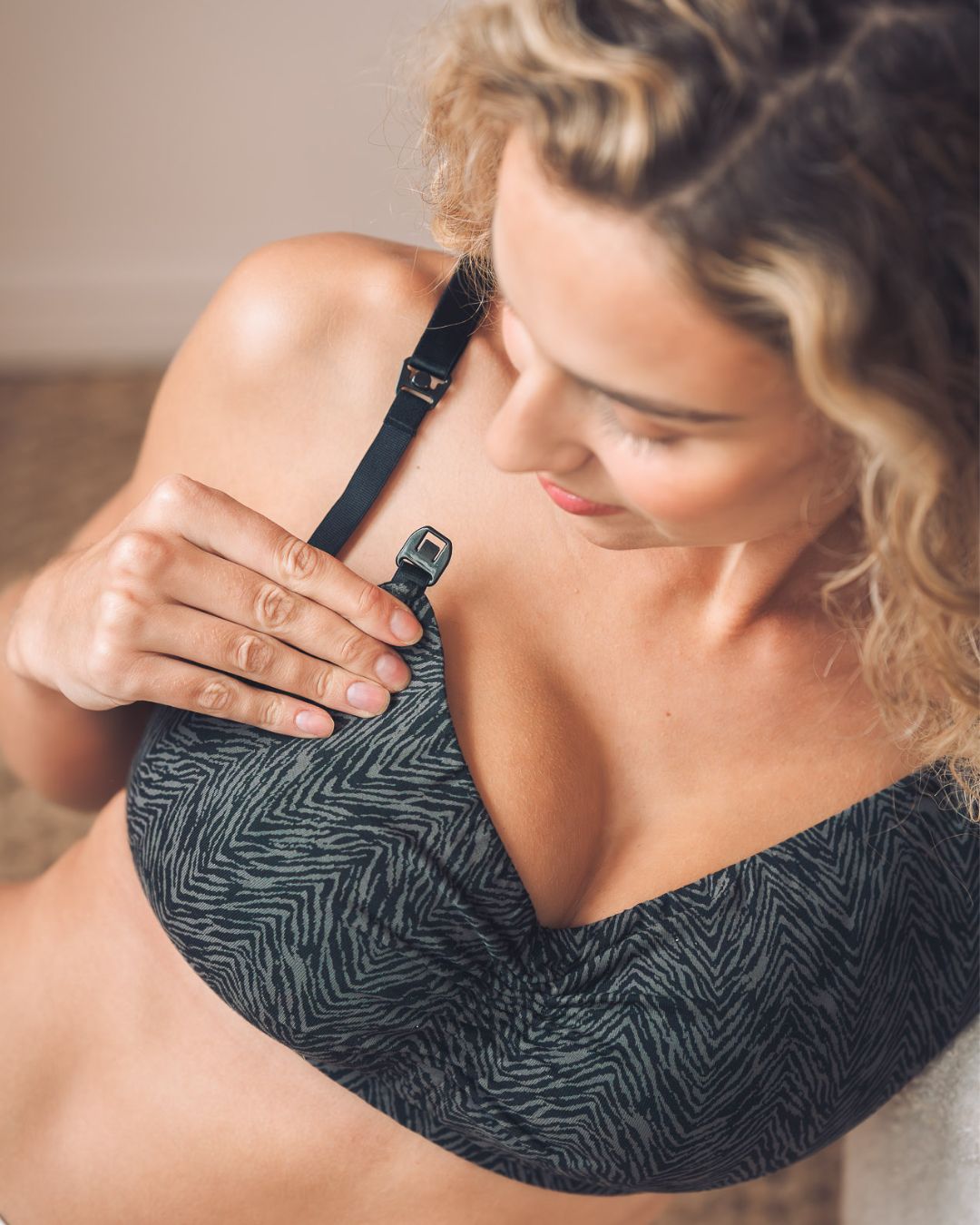
A best-seller for a reason, the innovative design of Blossom means it can be worn with a plunge neckline or in a crop top style, making it versatile for any office dress code. Triple cup-sized (up to JJ) to adjust with your fluctuating body, soft stretchy fabric for ultimate comfort, and easy-access clips for fuss-free feeding, make Blossom an essential bra for nursing.

The ingenious design of this fuller cup nursing bra ensures exceptional support for G to L cups thanks to the side slings, a firm underband and cups double-layered with cotton and mesh overlay. Additional retainer straps and easy-to-use clips allow for more skin-to-skin contact when breastfeeding.

the design of our best sleep bra for fuller cups makes it perfect for breastfeeding, particularly for night feeds. Soft organic cotton and zero clips or components not only mean it’s ultra comfortable, but the crossover style offers easy access for on-demand feeding.
Don’t forget, we love to see you wearing our maternity and nursing bras – if you’re happy to share pics on Instagram, please tag us @RoyceLingerie. Or if you want to share any feedback on our bras drop us an email at [email protected].
For some excellent advice on breastfeeding – whether that’s health tips, details on support groups or more about your rights when it comes to work or nursing in public – check out these trusted organisations:
Breastfeeding and going back to work – NHS
Continuing to breastfeed when you return to work – Maternity Action
La Leche League GB – Friendly breastfeeding support from pregnancy onwards


